Shijiazhuang Topstar
International Trading Co., Ltd.


Get In Touch
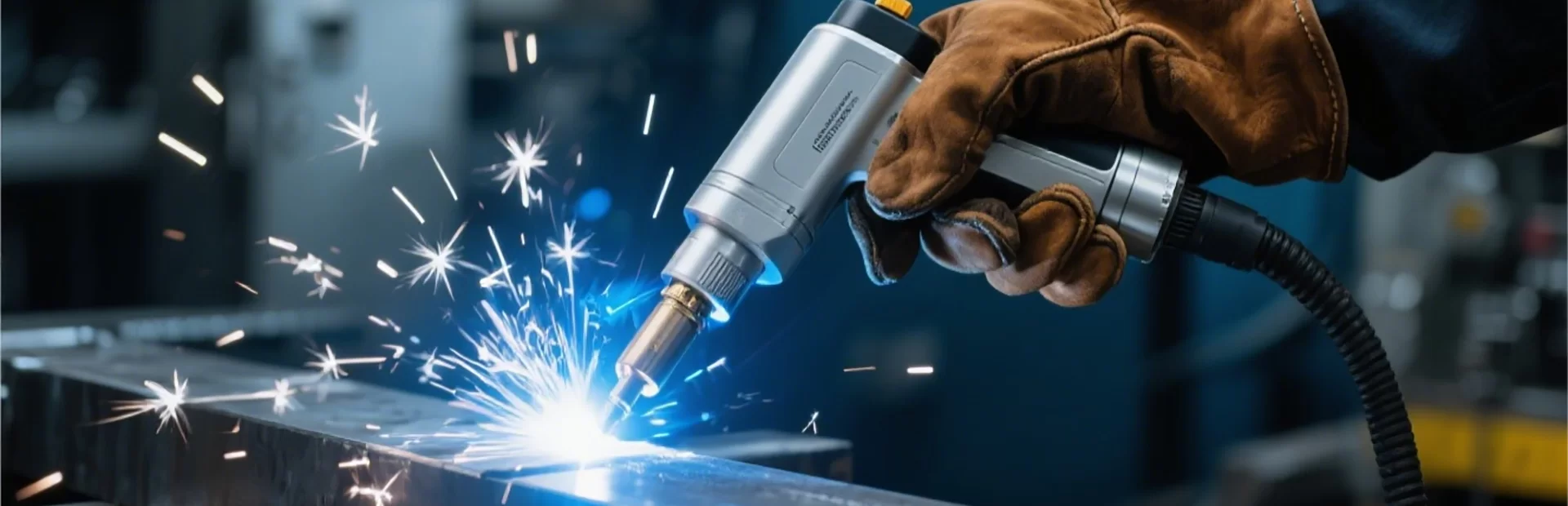
As someone who's spent years observing the manufacturing landscape, I've seen a lot of shifts. But few have been as transformative, or as genuinely exciting, as the rise of automated welding. We're not just talking about machines doing repetitive tasks anymore; we're talking about sophisticated systems that are redefining precision, speed, and safety. And at the heart of this revolution, undoubtedly, is the robot arm welding machine. To be honest, when I first heard about industrial robots making welds, I was a bit skeptical. Could they really match a seasoned human welder's touch? Well, the answer, I've learned, is a resounding yes – and then some.
Essentially, a robot arm welding machine is a multi-jointed industrial robotic arm, meticulously controlled by computer programming, with a welding tool (or welding gun) attached to its business end. This setup allows it to execute incredibly precise, often complex, welding tasks automatically. It’s perfect for those high-volume, high-quality production environments where consistency is king. Think about it: a flexible arm completing intricate three-dimensional paths at a fixed workstation. It's the core equipment for industries chasing high output and impeccable consistency on complex structures.
The benefits of robotic welding automation are pretty compelling, actually. For starters, we're talking about production efficiency that simply blows manual methods out of the water.
· Non-stop Operation & Speed: These machines can work 24/7. Literally. Their welding speed is consistently high, far exceeding human capabilities, which means a massive jump in productivity. No coffee breaks, no fatigue!
· Unwavering Quality: This is where robotic welding machines truly shine. The robot's precise, repeatable movements eliminate human variables like skill fluctuations, tiredness, or even a bad mood. The result? Uniform, aesthetically pleasing, and high-quality welds on every single product. Consistency is a huge plus, especially when dealing with critical components.
· Flexibility for Modern Manufacturing: This might surprise some, but these systems are incredibly versatile. By simply swapping out fixtures and reprogramming, the same robotic welding line can swiftly adapt to different products. It's a dream come true for "high-mix, low-volume" production models, a common challenge in today's market.
· Long-Term Cost Savings: Yes, the initial investment for a robot arm welding machine can be significant. But over time, the reduction in labor costs (fewer skilled welders needed for hazardous tasks), lower management overhead, and significantly reduced rework and scrap rates (thanks to that consistent quality) make the ROI very attractive.
· Improved Working Conditions: This is a big one for me. Workers are moved away from hazardous welding fumes, intense light, and high temperatures. They can then engage in higher-value tasks, like monitoring and maintenance. It's not just good business; it's good corporate social responsibility.
So, how does a typical robotic welding machine operation actually work? It's a pretty streamlined process:
1. Preparation & Fixturing: Raw materials (various metals like steel, aluminum, stainless steel) are prepared and loaded into precise fixtures that hold them in place. The accuracy here is paramount for robotic success.
2. Programming the Path: A skilled technician programs the robot's welding path, speed, voltage, and wire feed rate using CAD data or by "teaching" the robot points. This is where the 'methods' are truly defined.
3. Automated Welding: The robot executes the programmed welding sequence. Common methods include MIG/MAG (Gas Metal Arc Welding), TIG (Gas Tungsten Arc Welding), or even laser welding, depending on the application and material.
4. Quality Control & Testing: Post-welding, parts are inspected. This can involve visual inspection, but for critical applications, non-destructive testing (NDT) like X-ray, ultrasonic testing, or dye penetrant inspection are common. Adherence to standards like ISO 9606, AWS D1.1, or EN 1090 is typical.
5. Finishing: Excess spatter might be removed, and parts moved to the next stage of manufacturing.
Service life for these robust systems can easily exceed 10-15 years with proper maintenance, a testament to their industrial design.
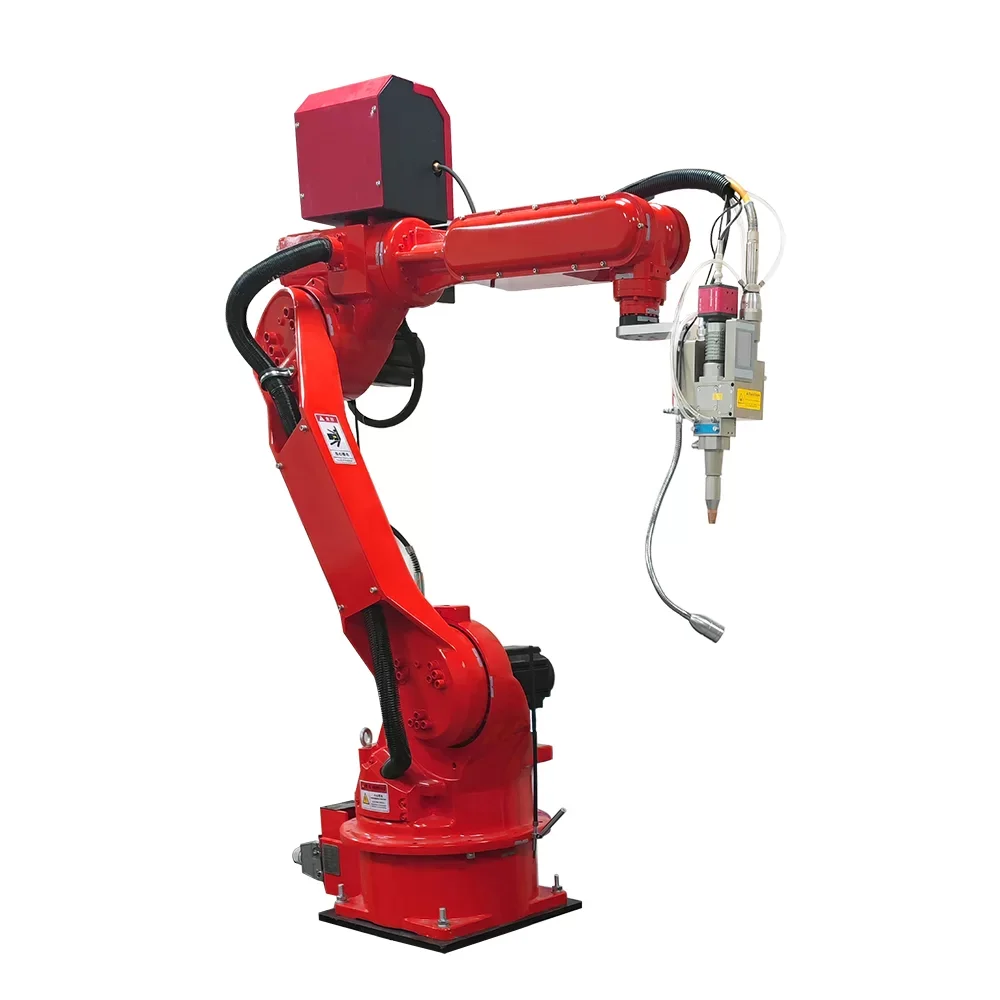
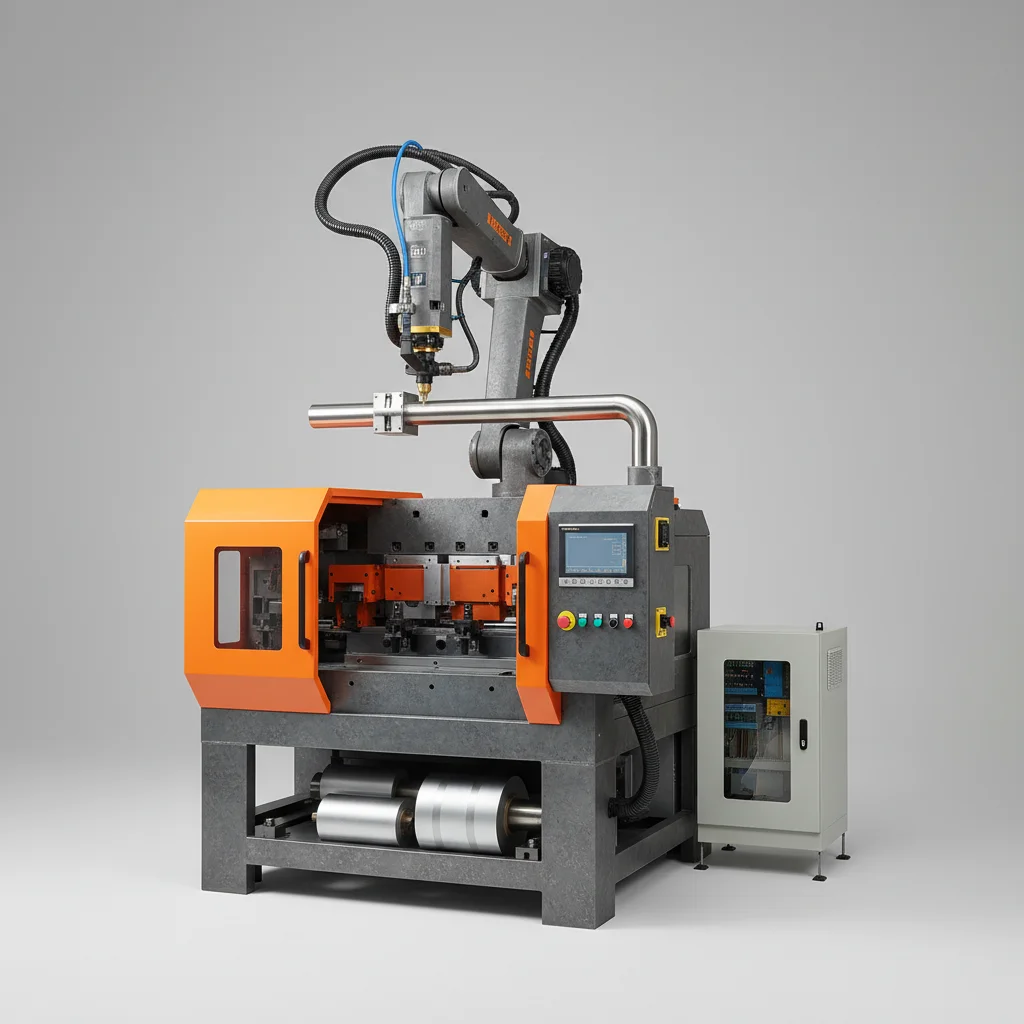
A modern robot arm welding machine in action, highlighting precision and efficiency.
Parameter | Specification |
Reach (Arm Length) | ≈ 1.4m - 2.5m (real-world use may vary) |
Payload Capacity | 5 kg - 20 kg (for welding torch & peripherals) |
Number of Axes | 6 (standard) to 7 or more (for enhanced flexibility) |
Repeatability | ± 0.02 mm - 0.08 mm |
Welding Speed | Up to 2-3 m/min (depending on process & material) |
Power Supply | 3-phase AC, 380V (industry standard) |
Cooling Method | Air or Water-cooled (for welding gun) |
The reach of robotic welding automation is truly expansive. From the biggest industries to more specialized niches, these machines are making a difference.
· Automotive Manufacturing: This is arguably the largest user. Think body-in-white production lines. From chassis to suspension and exhaust pipes, robots weld nearly every component. It's a textbook example of high automation.
· Construction Machinery: Large structural components for excavators, cranes, and loaders demand immense strength and consistent quality. Robots deliver.
· Rail Transportation: The frames and skins of high-speed rail and subway cars are welded with incredible precision, ensuring structural integrity and safety.
· Aerospace: Here, quality and reliability are non-negotiable. Engine components and aircraft structures, often made from exotic alloys, are increasingly welded by robots.
· Metal Furniture & Home Appliances: For mass production of items like steel office furniture, washing machine drums, or refrigerator brackets, the consistency and speed are ideal.
· Shipbuilding: While challenging due to scale, robotic welding automation is gradually being adopted for segmented welding tasks, improving efficiency in a historically labor-intensive industry.
Many customers I've spoken with in these sectors praise the drastic reduction in defect rates and the ability to meet tighter production deadlines, especially important when dealing with certifications like ISO 9001.
The market for robotic welding machines is quite competitive, with several key players offering excellent solutions. Customization is often a big factor, as is the level of integration support.
Vendor Type | Strengths | Considerations |
Tier-1 Global Brands (e.g., ABB, FANUC, KUKA) | Broadest product range, high precision, extensive global support, advanced software. | Higher initial investment, potentially more complex programming for novices. |
Specialized Welding Robot Providers (e.g., OTC Daihen, Yaskawa Motoman) | Deep expertise in welding applications, integrated power sources, user-friendly welding interfaces. | May have a slightly narrower range of general-purpose robots. |
Regional/Integrator Focused (e.g., Topstarlaser.com, local integrators) | Cost-effective solutions, strong local support, high degree of customization for specific needs. | May use robots from various manufacturers, support can vary by integrator. |
When looking at customization, it's not just about the robot arm itself. It's about the entire cell design: tooling, part manipulators, safety features, fume extraction, and even integration with upstream/downstream processes. A good integrator, like Topstarlaser, will work with you to tailor a solution that fits your exact production needs, often leading to impressive case studies of improved throughput and quality.
The trend is clearly towards even more intelligent, connected, and collaborative robotic welding machines. We're seeing advancements in vision systems for real-time seam tracking, AI-driven programming that learns from human welders, and even collaborative robots (cobots) that can work safely alongside humans. It's an exciting time, and the impact on manufacturing efficiency and product quality is only going to grow. I guess it's safe to say, the human touch in welding is evolving, not disappearing. It's moving from the torch to the programming console, orchestrating a symphony of steel.
1. International Federation of Robotics (IFR). "World Robotics - Industrial Robots." Annual statistical reports.
2. American Welding Society (AWS). "Welding Handbook." Volume 1-5.
3. ISO 9001:2015 - Quality management systems — Requirements.
4. Occupational Safety and Health Administration (OSHA). "Safety and Health Regulations for Welding, Cutting and Brazing." 29 CFR 1910.252.