Shijiazhuang Topstar
International Trading Co., Ltd.


Get In Touch
Compressed air is often called the "fourth utility" because it is as vital to modern industry and daily life as electricity, water, and gas. Whether it is powering a massive assembly line in a car factory or simply helping a stranded motorist on the side of the road, the technology used to squeeze air into a usable energy source is diverse and fascinating. As technology advances, the market has split into highly specialized categories, ranging from massive industrial installations to handheld devices. Understanding the nuances of these systems is essential for anyone looking to invest in pneumatic power, whether for professional or personal use.
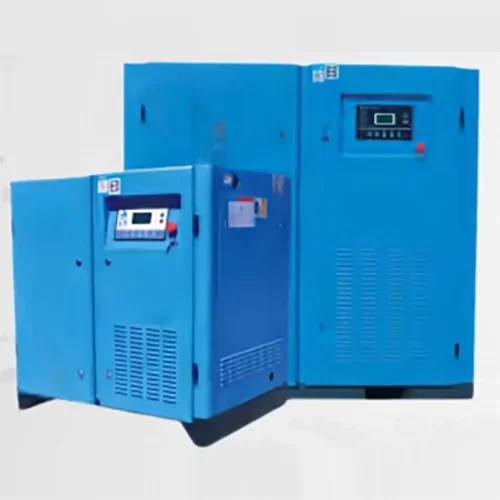
When a large-scale manufacturing facility or a construction firm requires a constant, high-volume supply of air, the selection process usually begins with an evaluation of global air compressor manufacturers. These companies are the titans of the industry, designing systems that are capable of running 24 hours a day, seven days a week, for decades. Unlike consumer-grade units, industrial compressors are engineered with high-duty cycles and advanced cooling systems to prevent mechanical failure under extreme stress.
Choosing between various air compressor manufacturers involves looking at more than just the price of the machine. Reliability, energy efficiency, and the availability of replacement parts are the primary concerns for industrial users. Leading manufacturers have moved toward "Smart Compression," integrating Internet of Things (IoT) sensors that monitor everything from vibration and heat to the moisture content of the air. This allows for predictive maintenance, where the machine itself can signal a technician before a part fails, preventing costly factory downtime.
Furthermore, these manufacturers often specialize in different compression technologies. Some focus on rotary screw designs, which provide a smooth, continuous flow of air for automated machinery, while others specialize in centrifugal compressors for massive applications like power plants or chemical refineries. The relationship between a factory and its chosen manufacturer is often a decades-long partnership, involving regular audits to ensure that the air system is operating at peak efficiency and not wasting electricity—which can account for a significant portion of a facility’s overhead.
In many high-tech sectors, standard atmospheric air is not sufficient for the task at hand. Industries such as electronics manufacturing, food preservation, and laser cutting require an inert environment to prevent oxidation and ensure product quality. This has led to the rise of the nitrogen air compressor—a specialized system that generates high-purity nitrogen on-site. Historically, companies had to buy nitrogen in heavy, high-pressure cylinders or liquid tanks, which was expensive and logistically difficult.
A nitrogen air compressor works by taking standard compressed air and passing it through a filtration system—either a membrane or Pressure Swing Adsorption (PSA) technology—to strip away oxygen, carbon dioxide, and water vapor. What remains is a stream of pure nitrogen. In the food industry, this is used for "Modified Atmosphere Packaging." For example, when you open a bag of coffee or chips, the "air" inside is actually nitrogen, which prevents the oils in the food from going rancid.
In the electronics world, the nitrogen air compressor is even more critical. During the soldering process, nitrogen prevents the formation of dross (oxidized metal), ensuring that circuit boards are clean and durable. By generating nitrogen on-site, a facility can reduce its carbon footprint by eliminating delivery trucks and significantly lower its operational costs. This technology represents the shift from general-purpose tools to highly specialized pneumatic solutions that solve specific chemical and industrial challenges.
While massive factories require complex rotary systems, the local automotive garage or woodworking shop usually relies on a different type of technology: the single stage reciprocating air compressor. This design is the "workhorse" of the small-business world. It uses a simple piston-and-cylinder mechanism, much like a car engine. On the downward stroke, air is sucked into the cylinder; on the upward stroke, it is compressed once (in a single "stage") and sent directly into a storage tank.
The single stage reciprocating air compressor is favored for several reasons. First, it is remarkably durable. Because it is mechanically simpler than a rotary screw compressor, there are fewer parts that can go wrong. If a valve or a gasket fails, it is often a repair that the shop owner can perform themselves without needing to call in a specialist. Second, these units are excellent at providing high pressure in short bursts. For a mechanic using an impact wrench to change tires or a carpenter using a framing nailer, the compressor doesn't need to run constantly; it only needs to keep the tank full.
However, users must be aware of the "duty cycle." A single stage reciprocating air compressor generates a significant amount of heat during the compression stroke. If the machine is run for too many hours without a break, it can overheat. This is why these units are often paired with large tanks, allowing the motor to rest while the user draws from the stored air. For the professional who needs a reliable, easy-to-maintain, and cost-effective source of power, the single-stage reciprocating design remains the gold standard.
At the other end of the spectrum from industrial factory units is the portable air compressor for car maintenance. This is perhaps the most common type of compressor in the world, owned by millions of drivers who want the security of being able to handle a flat tire or a low-pressure warning without searching for a gas station. The evolution of this technology has been driven by the need for convenience, speed, and compact storage.
A modern portable air compressor for car use is often no larger than a lunchbox, yet it can generate enough pressure to inflate a standard passenger tire in just a few minutes. Most of these units plug directly into the car’s 12V cigarette lighter, but the newest models are increasingly battery-powered, offering total freedom from cables. These devices have become highly "intelligent," featuring digital displays where the user can set the desired PSI (pounds per square inch). The compressor will then run until it hits that exact pressure and shut off automatically, preventing over-inflation.
Beyond just emergency tire repair, these portable units are used for maintaining optimal tire pressure, which is crucial for fuel efficiency and tire longevity. Driving on under-inflated tires increases rolling resistance, which forces the engine to work harder and burn more fuel. By keeping a portable air compressor for car use in the trunk, a driver can ensure their vehicle is always operating at peak efficiency. It is a perfect example of how complex industrial technology has been shrunken down into a user-friendly, life-saving consumer product.